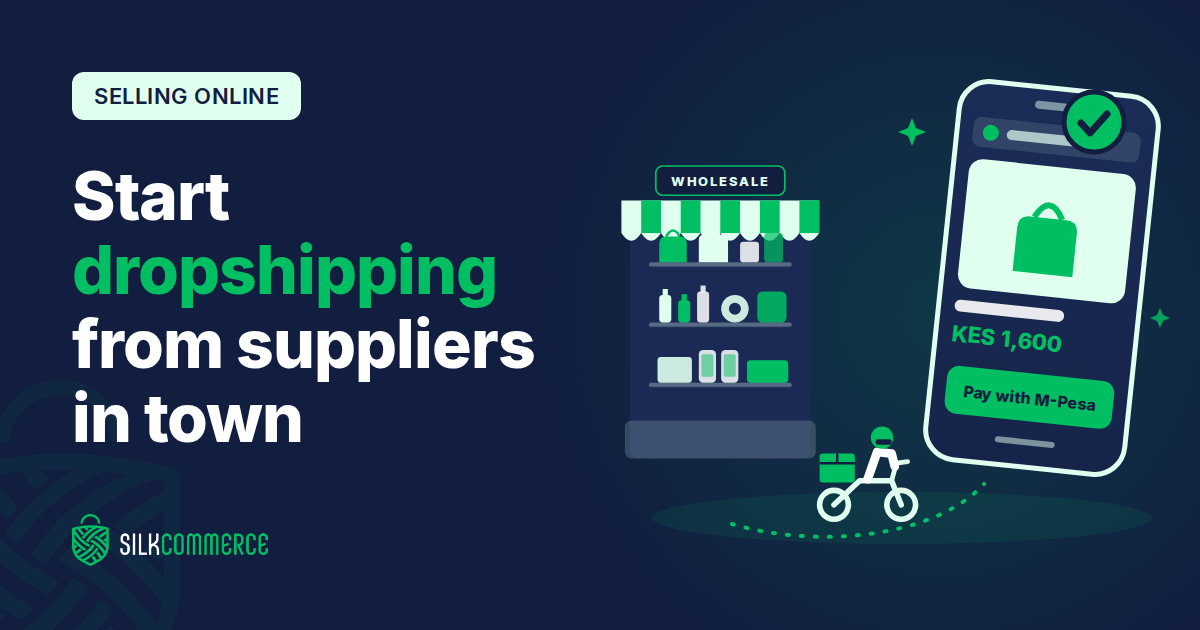
You walk down Luthuli Avenue or through Eastleigh and see shelves full of things people would happily buy online: phone accessories, handbags, kitchen gadgets, baby clothes. The problem is the money. Buying stock upfront can take tens of thousands of shillings you don't have.
Dropshipping in Kenya solves that. You sell the product first, collect payment, then buy it from a supplier in town and send it to your customer. Your stock sits on someone else's shelf until a customer has already paid for it.
Here is how to start, step by step.
How local dropshipping works
The idea is simple:
- You list a supplier's product on your online shop or social pages, at your own price.
- A customer orders and pays you.
- You buy that item from the supplier at their price.
- A rider or courier delivers it to the customer.
- The difference between the two prices is yours.
Most dropshipping guides online talk about shipping from China, which means weeks of waiting and customs headaches. Buying from suppliers in your own town means customers in Nairobi can get their order the same day or the next, and upcountry customers within a few days. That speed is your selling point.
Choose one product area first
Don't try to sell everything. Pick one category you understand and that people already buy online. Good starting points:
- Phone accessories — chargers, earphones, cases and power banks from the electronics shops around Luthuli Avenue.
- Fashion and bags — clothes, shoes and handbags from Eastleigh wholesalers.
- Beauty and cosmetics — skincare, hair products and perfumes from the wholesale shops around Nyamakima and River Road.
- Home and kitchen — storage containers, small appliances and décor.
Look for products that are light (cheap to deliver), hard to break, and easy to photograph. A focused shop also looks more trustworthy than a page selling sufurias next to wigs.
Find suppliers you can rely on
Your supplier is now part of your business, so choose carefully. Spend a day walking the shops in your chosen area and talk to three or four suppliers before you commit.
Ask each one:
- Can I buy single pieces at a fair price, or only in bulk?
- Can I take photos of your products to sell online?
- How do I check that an item is in stock before I sell it?
- Will you package the item for a rider to collect?
- What happens if a product is faulty? Can I exchange it?
Save their numbers, note their opening hours, and start with the two or three who answer clearly. Keep a backup supplier for your best-selling items so one empty shelf doesn't stop your business.
Price for profit, not just to be cheap
It is tempting to add KES 200 to the supplier's price and call it done. But your costs are bigger than the product. Work out your price like this:
- Supplier price: KES 800 (a handbag, for example)
- Your fare or rider to collect from the shop: KES 150
- Packaging: KES 50
- Your time, phone data and marketing: KES 150
- Your profit: KES 450
That makes a selling price of about KES 1,600, with delivery charged separately or built in. If the price looks too high next to the same bag elsewhere, either find a cheaper supplier, sell better photos and service, or move to a product with more room.
Always know your numbers before you post a product, so a "last price?" message doesn't push you into selling at a loss.
Get paid before you buy
This is the rule that makes dropshipping work: never buy stock for an order that hasn't been paid. Cash on delivery means you spend your own money on stock and hope the customer is home and still wants it.
Ask customers to pay with M-Pesa when they order. To make this easy and avoid fake payment screenshots, sell through an online store where customers pay at checkout. With SilkCommerce, you get your own store website and customers pay with M-Pesa directly at checkout, so you only go to the supplier once the money is in.
Use a separate Till or Paybill for the business, not your personal number. It keeps your records clean and makes you look professional.
Take your own photos and write honest descriptions
Many sellers copy the same supplier photo, so customers see it on ten pages and trust none of them. Take your own photos in the shop, near natural light, against a plain background. Show the product from several angles and next to something familiar so customers can judge its size.
In the description, give the facts customers will ask about: size, colour, material, what's in the box, and delivery time. Be honest. If an item ships the next day because you collect it in the morning, say so.
Plan your deliveries
Delivery is where dropshippers win or lose customers. Set up a simple routine:
- Within Nairobi: collect from the supplier and send with a trusted boda rider, or ask the supplier to hand it straight to your rider.
- Upcountry: use a courier or a matatu parcel service, and send the customer the tracking or receipt details.
- Collection times: pick one or two runs a day, for example orders paid by 11am go out the same afternoon.
Check every item before it leaves the shop. A wrong size or faulty product costs you the delivery fee twice and the customer's trust once.
Make it official as you grow
You can start small, but plan to register your business name and get a KRA PIN for it once orders become regular. It helps you open a business M-Pesa Till, work with bigger suppliers, and build a brand customers remember. Requirements change, so check the current steps on eCitizen or speak with an accountant.
Ready to start selling?
Set up your SilkCommerce store, add your first products, and start taking M-Pesa payments before you ever buy stock. Create your store →